
A Step-by-Step (But Not Too Precious) Guide to House Demolition and Site Clearing
Demolition isn’t a “rip it down and haul it away” job. If you treat it like one, you’ll pay for it twice, once in delays, and again in change orders you didn’t see coming.
I’ve watched perfectly reasonable projects go sideways because someone skipped a permit, assumed the utilities were dead, or didn’t bother to test for asbestos until the excavator was already on site (that’s a painful phone call). House demolition and site clearing is half paperwork, half physics, and a surprisingly large slice of diplomacy with inspectors, neighbors, and utility companies.
One-line truth: the fastest demo job is the one that doesn’t stop.
Start with permits, risks, and the method (yes, in that order)
Permits drive methods more often than people like to admit. Your city or county may restrict mechanical demolition near property lines, require specific dust controls, or mandate an asbestos survey before a single shingle comes off. So before you obsess over equipment, get clarity on approvals and constraints. If you’re considering Brisbane house demolition and site clearing, the same principle applies—local regulations dictate the playbook, not the excavator operator.
Here’s the practical workflow I use:
– Confirm permit requirements with the local building department (demo permit, right-of-way/sidewalk closure, tree removal, erosion control, asbestos notification, varies wildly).
– Document utility disconnect requirements and get them in writing (verbal “yeah we shut it off” doesn’t count when something sparks).
– Run a targeted risk assessment: asbestos, lead paint, mold, unstable framing, basements/cisterns, nearby structures, overhead lines.
– Pick a demolition method that matches the hazards and the rules, not your impatience.
Now, this won’t apply to everyone, but if your house is pre-1980, I assume there’s a non-trivial chance of regulated materials somewhere, flooring mastics, pipe wrap, old siding, you name it.
Demo methods: which one fits your site?
You’ve got options, and the “best” choice isn’t universal. It’s situational.
Mechanical demolition (the classic)
Fast. Efficient. Loud. Dusty. Great when you’ve got room for equipment, clear fall zones, and minimal adjacency risk.
Selective demolition / interior gut
Often needed for remodel-to-shell projects, fire-damaged structures, or when you’re keeping portions of the building. This is where hidden utilities and structural surprises love to show up.
Deconstruction (salvage-heavy)
Slower, more labor-intensive, and sometimes cheaper than you’d think once disposal is factored in. If you care about reclaiming lumber, fixtures, brick, or reducing landfill waste, this is the route (or at least a hybrid).
Engineered / constrained demolition
Tight urban lots, shared walls, fragile adjacent structures, or tricky slopes can force you into a more controlled approach: smaller machines, more hand work, more sequencing, and more oversight.
Look, if you’re demoing a house five feet from a neighbor’s finished basement, you don’t “send it.” You plan it like a surgical procedure.
Utilities, paperwork, and safety workflows (the unglamorous spine of the job)
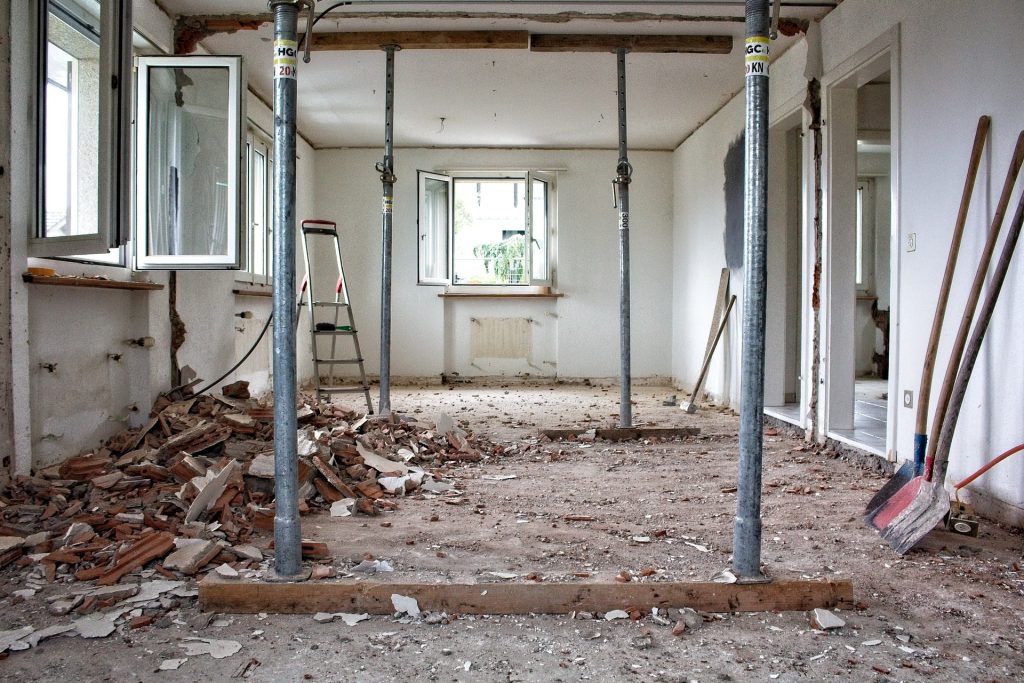
Most demolition injuries and “oh no” moments come from two things: energy sources and bad assumptions.
So the job becomes a sequence:
- Locate every utility (gas, electric, water, sewer/septic, telecom, irrigation, propane tanks, solar, wells, people forget wells).
- Shut down and isolate: lockout/tagout where applicable, cap lines, verify dead circuits, and mark what remains live.
- Permits get filed early with supporting plans: dust control, erosion/runoff, asbestos survey results, waste manifests if required.
- Safety plan gets specific, not generic:
– roles and supervision
– PPE requirements by task
– exclusion zones and spotter rules
– emergency response + nearest hospital
– air monitoring and containment steps when hazards exist
If your contractor hands you a one-page “safety policy” that looks like it was downloaded in 2009, push back. A real plan reads like someone actually walked your site.
“Do we really have access sorted?” (you’d be surprised)
Access is not just “the gate is unlocked.” It’s staging, truck turning radius, where dumpsters sit, where equipment loads out, and whether you’re allowed to block a sidewalk for 20 minutes.
Short version:
– verify legal access and boundaries
– confirm work-hour restrictions (noise rules can be brutal)
– post signage and barriers
– establish controlled entry points and an access log
And keep your permit packet on site. Inspectors love showing up unannounced right after someone says, “They never come by here.”
Budget and timeline: the part everyone underestimates
I’m opinionated here: if your demo budget has no contingency, it’s fantasy. Set aside 10, 15% as a reserve. Sometimes it won’t get used. Sometimes it saves the project.
What drives costs the most?
– disposal and haul distances
– hazardous material abatement (can dwarf the demo cost)
– access constraints (tight lots = slower work)
– required controls (dust suppression, traffic control, erosion measures)
– foundation removal vs. leaving in place (big swing)
Timeline-wise, permitting and utility disconnects are often the critical path, not the actual teardown. The building might come down in two days; approvals can take weeks.
Picking a contractor (and avoiding the smooth talkers)
Get at least three written bids. Not because you love paperwork, because you need to compare scope apples-to-apples. Ask what’s included and what’s not included. Then ask again.
I like contractors who:
– show up and ask annoying questions about utilities and access
– talk about debris streams without being prompted
– provide proof of insurance that isn’t “my cousin emailed it”
– can explain their dust plan clearly, without hand-waving
Contract language matters. Define payment triggers, change-order rules, disposal responsibility, and how hazardous discoveries are handled mid-job. If the contract is vague, the invoice won’t be.
PPE: not fancy, just correct
You don’t need to cosplay as a hazmat tech for every project, but you do need task-appropriate protection. Most residential demolitions call for a baseline kit plus upgrades when hazards show up.
Typical baseline PPE:
– hard hat
– safety glasses/goggles
– gloves suited to the task (demo gloves aren’t all the same)
– hearing protection around saws and heavy equipment
– steel-toe boots (puncture-resistant soles help)
– high-vis clothing
– respiratory protection when dust or suspect materials are present
Respirators are where people get sloppy. Fit matters, filters matter, and your local regulations might require a proper program. If you’re relying on a cheap dust mask while cutting old drywall, you’re guessing, not managing risk.
Waste, emissions, and the stuff your neighbors complain about
Noise complaints and dust complaints can shut you down faster than a broken excavator. Plan for that reality.
Dust control is usually a mix of water suppression, containment where needed, and smart sequencing. Emissions reduction is partly equipment choice and partly discipline: don’t idle machines forever, fix leaks immediately, and keep engines maintained.
A concrete data point, because people ask: construction and demolition debris is a major waste stream. The U.S. EPA estimated about 600 million tons of C&D debris were generated in the United States in 2018 (EPA, Advancing Sustainable Materials Management: 2018 Fact Sheet). That number is why many jurisdictions are pushing sorting and recycling requirements harder each year.
Site clearance and debris management (where good projects stay good)
If you want a clean site ready for a new build, debris handling can’t be an afterthought. Sorting on the fly is easier than trying to unmix a dumpster later.
I’ve seen this work best: set up the site so sorting is the default behavior, not a heroic act.
A simple segregation approach:
– Concrete/masonry (often recyclable as aggregate)
– Metals (scrap value can offset costs)
– Clean wood (sometimes recyclable, sometimes not, depends locally)
– Mixed debris (the expensive dumpster)
– Hazardous/regulated (handled separately, documented carefully)
One-line reminder: mixed waste is where budgets go to die.
Hazardous materials: handle early or suffer later
If asbestos, lead, PCBs, or contaminated soil are on the table, you plan around them, not through them. That usually means a pre-demolition survey, a written abatement plan, proper containment, licensed removal crews, air monitoring where required, and a clean chain of custody for disposal.
Here’s the thing: “We’ll deal with it if we find it” is not a strategy. It’s a delay.
Prep for the next build (grading, erosion, and a site that behaves)
After the structure is gone, the goal shifts: stable access, safe slopes, controlled runoff, and a buildable pad. Depending on your plan, you may need foundation removal, backfill, compaction, erosion controls, and rough grading.
Don’t skip runoff planning. Mud and sediment leaving your site can trigger fines, neighbor disputes, and stop-work orders. It’s boring, until it isn’t.
If you want to optimize beyond the basics, the next layer is coordination: lining up abatement, utilities, demolition, hauling, and grading so crews aren’t waiting on each other (or worse, undoing each other’s work). That’s where schedules stop being a calendar and start being a weapon.