
Buyers don’t fall in love with square footage first.
They fall in love with the feeling that the place won’t become a problem.
That’s why pressure washing, done at the right time and in the right spots, quietly changes the entire mood of a showing before anyone even touches the lockbox. Clean siding and a bright driveway don’t just look nice; they reduce perceived risk. And risk is what makes people hesitate, lowball, or “keep looking.”
The curb doesn’t just show a house. It tells a story.
Look, people say they “can see past dirt.” Sometimes they can. More often, they *say* that because it sounds rational.
In reality, a grimy exterior is interpreted as a pattern: if the seller didn’t handle the obvious stuff, what else did they ignore? When the outside is crisp, walkway, stoop, lower siding, garage door, buyers tend to assume the boring maintenance is under control too. That assumption is worth real money, which is exactly Why Pressure Washing Matters?
I’ve watched buyers walk up to two similarly priced homes in the same neighborhood and treat one like a safe bet purely because the entry felt clean and intentional. Same layout.Same era. One just looked… handled.
What they clock before they ever tour (it’s faster than you think)
The pre-tour “inspection” isn’t analytical. It’s instinctive. Buyers notice:
– Driveway stains and algae lines (they read as neglect, not “patina”)
– Mildew at the north-facing siding or soffits
– A dirty front step that makes the whole entry feel unwelcoming
– Cobwebby corners around lights, eaves, porch rails
– Windows that look dull, even if they’re technically clean
And then they start doing that subtle math: *If this is what they showed me, what’s behind the walls?*
One-line truth
A clean exterior buys you the benefit of the doubt.
“Fresh and clean” is a signal, not a vibe
Here’s the thing: pressure washing isn’t merely cosmetic. It’s a form of nonverbal communication.
When a buyer sees bright concrete and evenly cleaned siding, it implies routine upkeep. That changes the entire tone of their internal conversation. Instead of hunting for failure points, they start picturing furniture placement and morning light.
Conversationally: it’s like showing up to an interview in pressed clothes. You might be just as qualified either way, but you’re not asking the other person to work as hard to trust you.
Technically: you’re reducing negative cues that trigger “deferred maintenance” assumptions, especially around moisture, drainage, and exterior envelope performance.
A data point (because this isn’t just feelings)
According to the National Association of REALTORS® 2023 Remodeling Impact Report, exterior projects tied to curb appeal tend to score high on perceived value and buyer appeal, and outdoor “standard” work like lawn care and improvements can show strong cost recovery. Source: NAR, *Remodeling Impact Report 2023* (realtor.org).
Pressure washing isn’t always listed as its own line item in those reports, but it lives in that same curb-appeal bucket, and it’s usually one of the cheapest ways to change the way the entire property is perceived.
The part nobody tells you: washing can expose problems
Now, this won’t apply to everyone, but if your house hasn’t been cleaned in years, pressure washing can reveal stuff you’ve been ignoring (or honestly didn’t notice).
Common “surprises” after a wash:
– Peeling paint that was camouflaged by dirt
– Water staining that points to gutter overflow or flashing issues
– Rot at trim edges
– Efflorescence on masonry (white mineral deposits) hinting at moisture movement
That’s not a reason to avoid washing. It’s a reason to do it early enough that you can handle what pops up without panic. If you wash two days before listing photos and discover failed caulk lines around a window, you’ve just created a stress problem you didn’t need.
Where the ROI actually is (and where people waste effort)
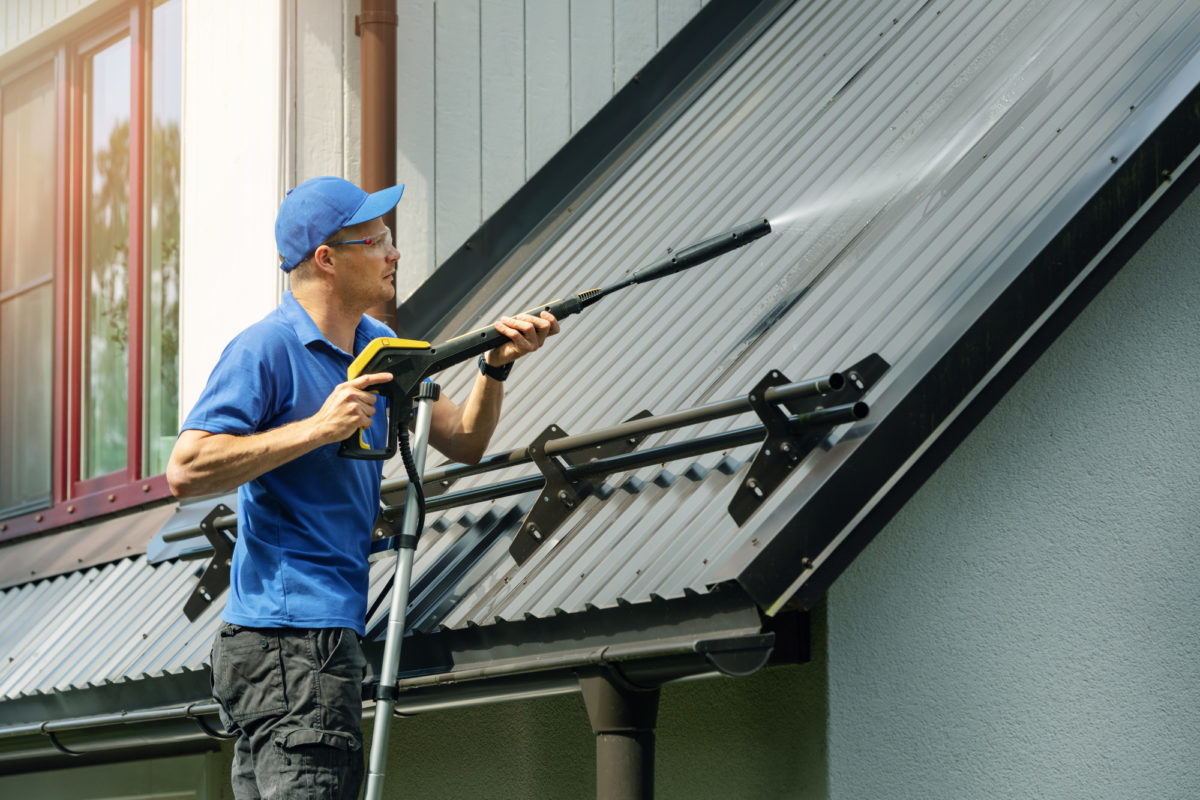
If you can only hit a few areas, don’t spray the entire world. Clean what buyers *process first*.
High-return zones:
– Front walk + steps (this is the handshake)
– Driveway apron and visible tire-track staining
– Lower 3, 4 feet of siding at the front elevation
– Front porch rails, columns, and the trim around the door
– Garage door (especially if it faces the street)
Lower-return zones (unless truly nasty): side yard fencing behind a hedge, the far back patio no one sees from the approach, or the top portion of siding that still looks uniform from the street.
I’m a little opinionated here: if your budget is limited, skip the “perfect backyard wash” and spend that time on the approach and entry. The first 12 seconds matter more than the last 12 minutes.
Timing: don’t wash too early, don’t wash in a rush
You want the house to peak visually when:
1) listing photos happen
2) showings start
3) open house traffic hits
In most cases, scheduling the wash 3, 10 days before photo day works well. Close enough that it still looks sharp, far enough that you can fix anything the wash uncovers.
Weather matters more than people admit. Heavy pollen, rain streaking, or windy dust can dull the effect fast. Also, freezing temps create safety and surface risks you don’t want, wet concrete plus cold mornings is a slip hazard and a liability nightmare.
A quick technical note (because you can absolutely damage a house)
Pressure washing is not “one setting fits all.” Different materials tolerate different approaches.
– Vinyl siding: generally forgiving, but don’t force water behind panels
– Wood siding/trim: easy to etch; use lower pressure and proper nozzle distance
– Stucco: can chip or scar if you get aggressive
– Brick: often okay, but mortar joints can fail if already weak
Detergents matter too. If you’re near landscaping you care about, use plant-safe solutions and pre-wet vegetation (basic, but people skip it).
Clean vs. deceptive: don’t oversell the shine
A freshly washed exterior should support an honest listing, not create a “too good to be true” vibe.
If buyers show up expecting pristine perfection and you’ve basically staged the exterior like a movie set while ignoring obvious repairs, the emotional swing is brutal: they go from impressed to suspicious in seconds.
Better approach:
– Clean thoroughly
– Touch up paint where it’s clearly needed
– Fix the simple stuff that reads as neglect (loose downspout, peeling caulk, broken light)
– Disclose what you’re not fixing if it’s relevant
Credibility sells houses. Hype doesn’t.
The most common mistakes I see (and they’re avoidable)
Some of these are small, but buyers treat them like tells.
– Washing unevenly so the home looks “patchy” in photos
– Blasting too close and leaving etch marks on concrete or wood
– Ignoring the front door area (while cleaning the back patio obsessively)
– Not pairing washing with basic yard discipline: edging, mulch, trimmed shrubs
– Leaving wet debris streaks on the driveway after the wash (sweep/rinse properly)
A clean exterior with sloppy details around it is like a tailored suit with dirty shoes. People notice. They always notice.
After the wash: turn “clean” into confidence
Pressure washing sets the stage. Then you reinforce the story:
Take a few “after” photos for your own records (and for the agent). Keep receipts if you hired it out. If you did minor repairs, jot down what was fixed and when. That tiny paper trail can reduce negotiation friction later because it signals you’re organized and not hiding the ball.
And if the exterior looks great, don’t sabotage it with an entry that smells musty or a foyer that’s dim and cluttered. Buyer psychology doesn’t compartmentalize well; cleanliness needs to feel consistent.
Clean sells. Not because buyers are shallow, because they’re cautious. And a washed exterior is one of the fastest ways to tell them, silently, “This home has been looked after.”